How to Make Your Parents' Home Safe: A Room-by-Room Guide
Last verified
If you're reading this, you've probably already noticed something — a stumble on the porch steps, a close call getting out of the tub, a worry you can't quite shake. You don't need to fix everything this weekend. A calm, room-by-room walkthrough is the best place to start.
Bathroom
The bathroom is where most in-home falls happen, thanks to wet, hard surfaces and awkward transfers in and out of the tub. Grab bars near the toilet and inside the shower, a non-slip bath mat, and a shower seat are the highest-value, lowest-cost changes most homes need. See our Atlanta bathroom safety pricing for what these typically cost.
Stairs and hallways
Sturdy handrails on both sides of every staircase, non-slip stair treads, and clear, uncluttered hallways matter more than most people expect. If stairs are becoming a daily struggle rather than an occasional hassle, a stair lift is worth pricing out — see Atlanta stair lift options.
Lighting
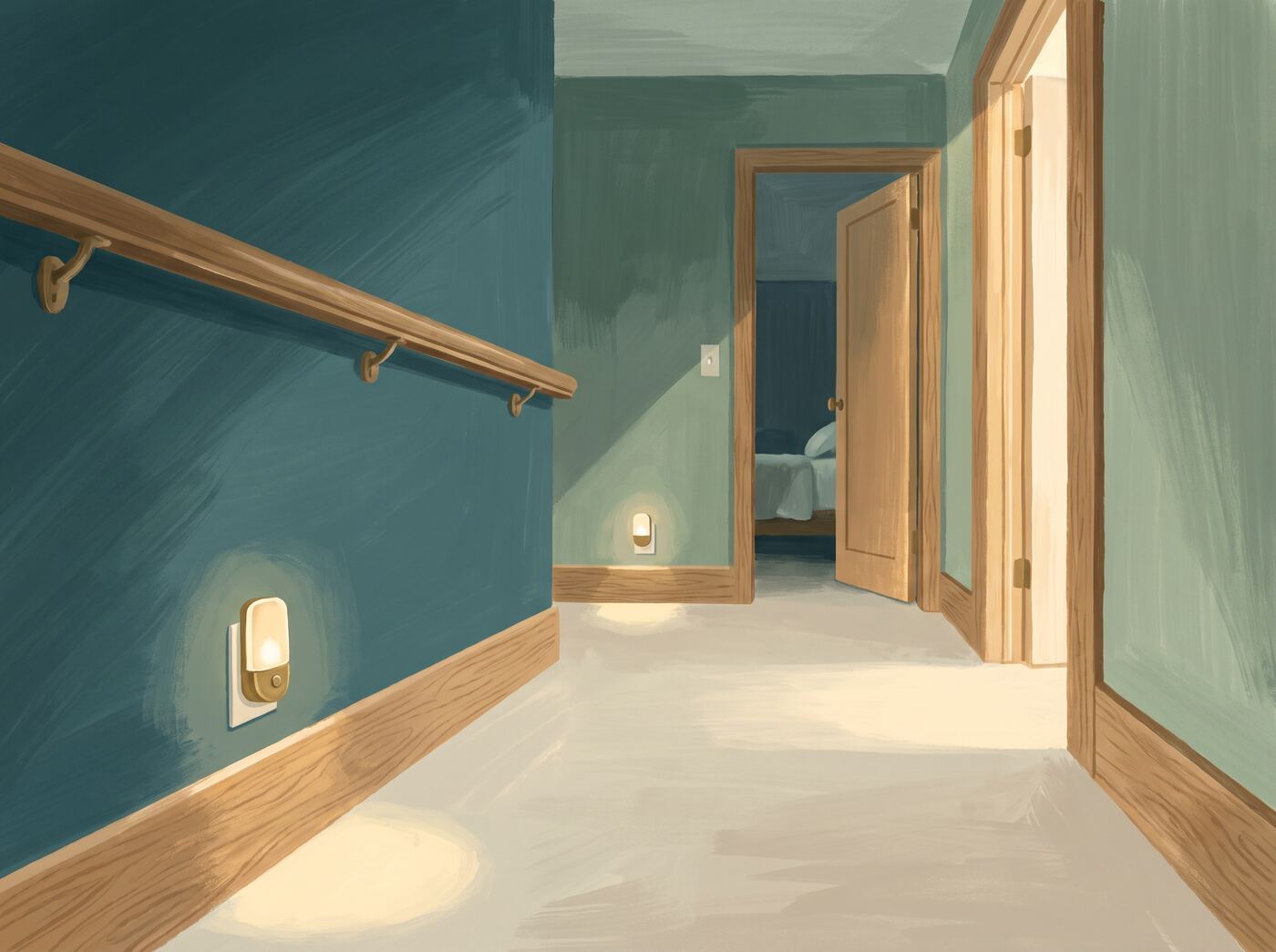
Aging eyes need significantly more light to see the same detail. Add nightlights along the path from bedroom to bathroom, brighten dim hallways and stairwells, and put a lamp within reach of the bed so no one has to cross a dark room to turn on the overhead light.
Flooring and rugs
Loose area rugs and runners are one of the most common — and easiest to fix — tripping hazards in an older adult's home. Remove them or secure them with non-slip backing, and tuck away or tape down any loose cords that cross a walking path.
Entryways
A single step at the front or back door can quietly become the biggest barrier in the house. If steps are getting harder to manage, use our ramp length calculator to see what a ramp would take, and check what it typically costs.
Kitchen and everyday areas
Move frequently used items to easy-reach shelves (between waist and shoulder height) so climbing or bending isn't part of daily routines. A stable, well-placed chair or stool near the counter can also make standing-heavy tasks like cooking much safer.
When to bring in a professional
A DIY pass handles rugs, cords, and lighting. Anything involving wall anchoring, plumbing, electrical, or structural changes — grab bars, walk-in showers, ramps, stair lifts — is worth a vetted contractor, both for safety and because it's usually cheaper to do it right the first time. If you're vetting someone with aging-in-place training specifically, see questions to ask a CAPS remodeler.
If your parent isn't on board yet
Noticing the risks is easier than getting a parent to agree to changes. See how to have the conversation with mom or dad about home safety for ways to bring it up that don't feel like taking over.
Next steps
Not sure where the biggest risks actually are? Take our free home safety quiz — twelve quick questions about the home, scored into a prioritized list. Ready to get modifications done? See Atlanta home modification services or call (404) 602-2998 and we'll help you figure out what to tackle first.
Frequently asked questions
Where should I start if the house feels overwhelming?
Start with a single walkthrough — one room at a time, ideally with your parent present. Our free home safety quiz turns that walkthrough into a prioritized list in about five minutes, so you're not guessing what matters most.
How much do home safety modifications typically cost?
It ranges widely: a grab bar runs $150-$400 installed, while a full accessible bathroom remodel can run $10,000-$25,000+. Most families tackle the highest-risk items first (bathroom, stairs, lighting) and phase in the rest.
Will Medicare or insurance pay for any of this?
Original Medicare generally does not cover home modifications. Some Medicaid waivers, VA benefits, and Area Agency on Aging programs may help eligible households — see our Atlanta funding overview for specifics, and always confirm current rules with the program directly.