Guides / Grab bar installation
Grab Bar Installation: What to Expect
Last verified
Grab bars are the cheapest change that prevents the most falls, and also the one most often installed wrong. Here is what a proper job looks like, so you know what to ask for before anyone drills into the wall.
Where they go
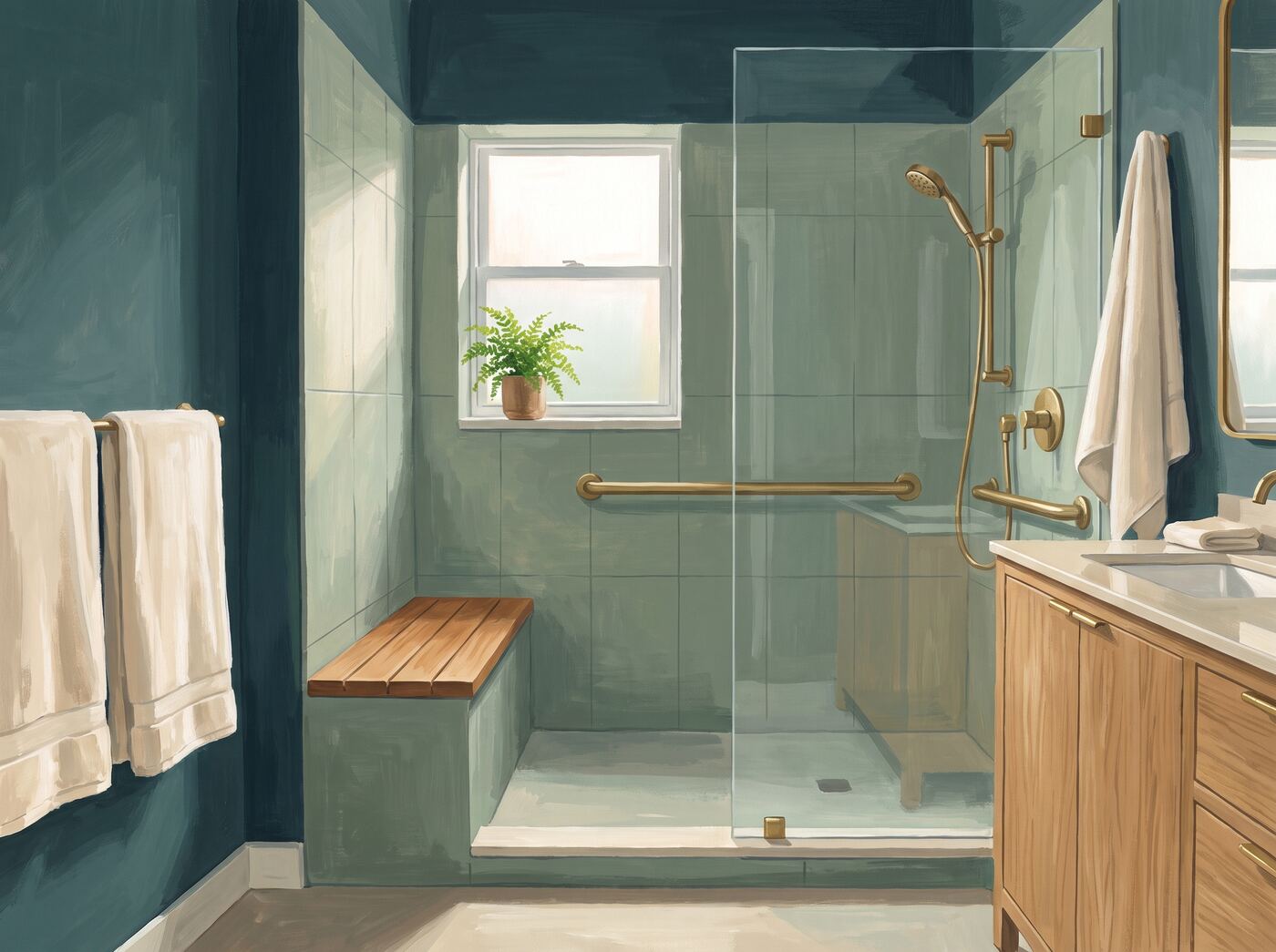
Most bathrooms need three or four bars, not one. The usual set is a vertical or angled bar just outside the shower entrance to hold while stepping in, a long horizontal bar on the back wall of the shower or tub, and a bar beside the toilet. Bars in a tub often add a short vertical bar at the faucet end. The exact layout depends on which hand the person favors, how they sit and stand, and where the studs are.
How high, and how strong
- Top of the grip 33 to 36 inches above the floor for toilet and shower bars, per the ADA standard (section 604.5).
- A bar beside the toilet should be at least 42 inches long, mounted on the wall nearest the toilet.
- Bar diameter 1¼ to 2 inches, with about 1½ inches of clearance from the wall so a hand can wrap around it.
- The bar and its mounting must resist 250 pounds of force, which means screws into a wall stud or added blocking, never drywall anchors, and never suction cups.
What a proper installation looks like
- The installer asks who will use the bars and watches how they get in and out of the shower or up from the toilet.
- They locate studs. Where no stud lines up with the right spot, they open the wall and add solid wood blocking, then patch and tile or seal.
- Bars are mounted with stainless screws into the framing and sealed where they meet tile so water stays out of the wall.
- They test each bar by pulling on it hard. A good bar does not move at all.
A single bar into a stud is usually done in under an hour. Adding blocking in a tiled shower is a half day or more, which is why the price ranges in our grab bar cost guide are wide.
Finish and look
Bars now come in brushed nickel, matte black, white, and bronze, and some double as towel bars or toilet-paper holders. A bar that matches the faucet reads as a bathroom fixture, not medical equipment. That matters more than it sounds if a parent is reluctant; see our guide on bringing up home safety with Mom or Dad.
Who to call in Atlanta
We connect Atlanta-metro homeowners with vetted local contractors who install grab bars every week. Free to be matched, no sales pressure. Call (404) 602-2998 or see grab bar installation in Atlanta.
Frequently asked questions
How high should a grab bar be mounted?
The ADA standard (section 604.5) puts the top of the gripping surface 33 to 36 inches above the finished floor for bars beside a toilet and in a shower or tub. An installer may adjust within that range, or place an additional angled bar, for the height and reach of the person using it.
How much weight does a grab bar need to hold?
The ADA standard requires bars and their mounting to resist 250 pounds of force. That is why bars are screwed into wall studs or added blocking, never into drywall alone, and why suction-cup bars are not a substitute.
Does Medicare pay for grab bars?
Original Medicare does not typically cover grab bar installation. Some Medicare Advantage plans offer a limited home-safety allowance, and some VA and Georgia Medicaid waiver programs can help people who qualify. Always confirm with the specific plan or program.
How much does grab bar installation cost?
A single bar installed into a stud typically runs $150 to $450 nationally and $150 to $250 in the Atlanta metro. Bars that need added blocking cost more. See our grab bar cost guide for the full breakdown.
Sources
- U.S. Access Board, ADA Standards, section 604.5 (grab bars) and 609 (grab bar specifications). access-board.gov/ada
- CDC STEADI, "Check for Safety" home fall prevention checklist. cdc.gov/steadi